
Reviewed · WALKING TOURS
Vancouver Old Town Treasure Hunt: Self-Guided Walking Game
Vancouver’s Old Town Treasure Hunt turns a walk through downtown and Gastown into a 90-minute puzzle trail. You use your phone to move from the Marine Building to historic waterfront landmarks, then into Gastown, solving 14 challenges as the story unfolds. The setting does the heavy lifting, with Art Deco stonework, railway history, old newspapers, Chinatown connections, and a famously unusual clock all packed into one short route.
I like the low $7.20 price and the freedom to go at your own pace. I also like that the game works offline, can be paused, and offers hints or a skip option if one clue stops the group cold. The main drawback is that you have no live guide to explain a detail or rescue you from a stubborn puzzle, and one missed clue can hold up the whole group.
In This Review
- Key points at a glance
- Why this route works as a Vancouver introduction
- Starting at the Marine Building
- Customs history near Howe and Cordova
- Waterfront Station and the railway link
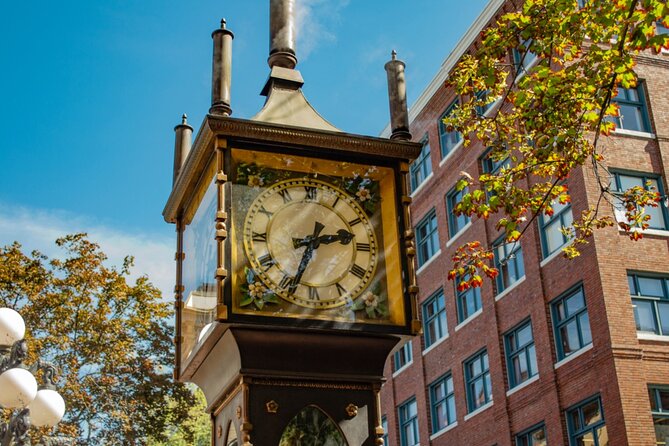
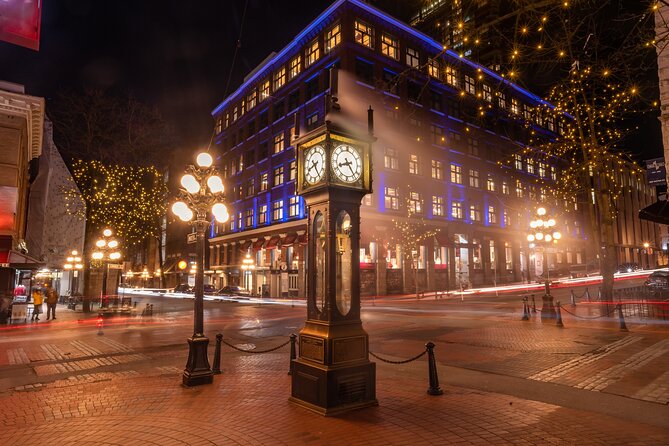
- The steam-powered clock
- The Dominion’s colorful Beaux-Arts details
- The Sun Tower and Vancouver’s newspaper age
- The narrow Sam Kee Building
- Meeting Gassy Jack, with necessary context
- Gaoler’s Mews and the 1886 fire
- Finishing near the Alibi Room
- How the puzzles feel in practice
- Is $7.20 a good deal?
- Who should book this game?
- Should you book the Vancouver Old Town Treasure Hunt?
- FAQ
- How long does the Vancouver Old Town Treasure Hunt take?
- How much does the experience cost?
- Is the tour guided?
- What language is offered?
- Where does the activity start?
- Where does the activity end?
- How many puzzles are included?
- Can I pause the game?
- Does the game work offline?
- Can my whole group use one phone?
- Are hints available if I cannot solve a clue?
- Is the activity private?
- Are service animals allowed?
- Is the route near public transportation?
- Can I cancel for a refund?
Key points at a glance
- Fourteen phone-based puzzles lead you from the Marine Building through Vancouver’s oldest downtown districts.
- The route links major landmarks, including Waterfront Station, the Steam Clock, the Sun Tower, and the Sam Kee Building.
- Offline play helps with access, though you still need to download and open the game before setting out.
- Hints and a skip button keep a difficult riddle from ending the outing.
- The private format suits small groups, with one phone working well for a group of three.
- The $7.20 rate is strong value if you want a short, flexible activity rather than a formal guided tour.
Why this route works as a Vancouver introduction
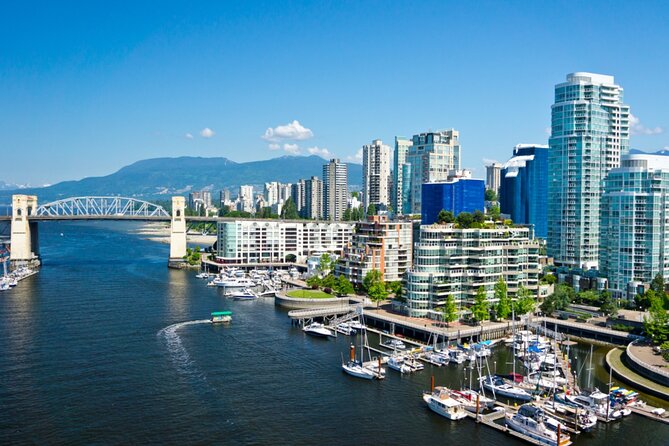
This is not a broad city tour. It focuses on a compact slice of Vancouver, moving from the waterfront into the old commercial core and Gastown. That focus is useful because the route gives each stop a job: you are not only looking at a building, you are searching for a detail that connects the place to the next part of the story.
The theme draws on Vancouver’s Gold Rush era and early development. You will encounter commercial shipping, customs, rail travel, newspapers, Chinese Canadian history, saloon culture, fire protection, and the city’s port economy. The information is delivered in short pieces inside the game, so you get a quick introduction rather than a long historical lecture.
I would treat this as a playful orientation walk. It works well on a first visit when you want to get your bearings, but it also gives locals and repeat visitors a reason to inspect familiar streets more closely. The route encourages you to look up at façades, read signs, and notice small architectural features you might otherwise pass.
More walking tours around Vancouver:
- Gastown Historic Walking Food Tour
★ 5.0 · 1,863 reviews - Vancouver Lost Souls of Gastown Walking Tour
★ 5.0 · 1,273 reviews - A Wok Around Chinatown: Culinary and Cultural Walking Tour Led by a Chef
★ 5.0 · 610 reviews
Starting at the Marine Building
The game begins at 355 Burrard Street, at the Marine Building. This is an excellent starting point because the building immediately gives you something worth examining. Completed in 1929 and 1930, it is Vancouver’s best surviving example of Art Deco design, with a connection to the city’s commercial shipping interests and Merchants’ Exchange.
Your first task is to look around for the answer to the opening challenge. That simple instruction changes the pace of the visit. Instead of walking past the entrance, you need to inspect the building and its surroundings. The game then supplies the story that makes the architecture easier to remember.
This first stop also sets the tone for the rest of the route. You will not be following a guide holding a sign or waiting for a group to gather. You receive step-by-step directions through the Questo app, then move when your group is ready.
Give yourself a few minutes to get the app running before you begin. Since the game is designed for offline use, downloading the required content ahead of time is sensible. One phone can serve a group, which keeps the experience simple, although sharing a screen means the person holding the phone may take the lead.
Customs history near Howe and Cordova
The next stop brings you to a federal customs warehouse at the corner of Howe and Cordova Streets. Construction began in 1911 and finished in 1913. Chief Architect David Ewart designed the building for the federal government, which used it to handle imported goods. Customs remained there until 1958.
This is the kind of stop that benefits from a puzzle format. A warehouse may not demand attention in the same way as an ornate landmark, but its purpose tells you how important imported goods were to Vancouver’s growth. The challenge gives you a reason to study the building rather than treating it as background scenery.
The route does not require you to absorb a large amount of information at once. Each location offers a brief story, then a question or riddle. If your group enjoys noticing dates, names, and visual details, these stops will feel satisfying. If you prefer a guide to tell the whole story in a flowing talk, the short app-based format may feel thin.
Waterfront Station and the railway link
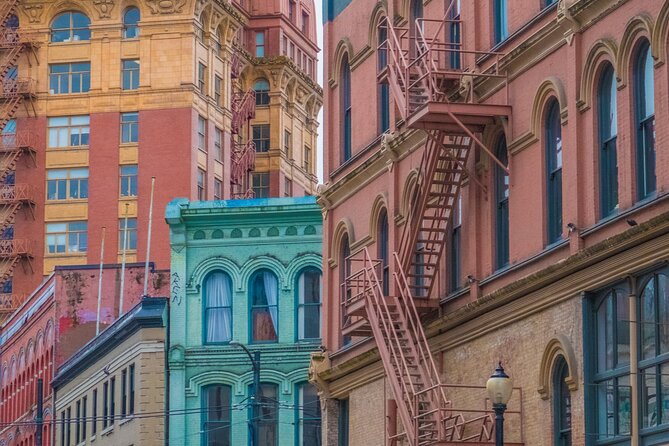
Waterfront Station adds a major transportation chapter. Built by the Canadian Pacific Railway and opened on August 1, 1914, it served as the Pacific terminus for transcontinental passenger trains to Montreal, Quebec, and Toronto. The building you see today is the third CPR station on the site.
The value here is the connection between the railway and the port. Vancouver’s waterfront was not simply a scenic edge of downtown. It was a working point where passengers, freight, and imported goods met. The game uses the station to connect the city’s physical location with its role in national transportation.
You will again search for an answer before advancing. This format makes the group stop and inspect the area, but it can also create a bottleneck if nobody sees the intended clue. Use the hint function early if you have spent several minutes circling the same detail. The goal is to keep the walk moving, not to prove that your group can defeat every riddle unaided.
A few more Vancouver trips worth weighing up
- Vancouver Bike or Ebike Rental – Self Guided Map provided
★ 5.0 · 149 reviews - Vancouver to Whistler Seaplane Day Trip: Self-Guided Adventure
★ 5.0 · 53 reviews - Sea to Sky Highway: a Smartphone Audio Driving Tour
★ 4.0 · 32 reviews - Western Canada Self-Driving Audio Guide English and German
★ 4.4 · 20 reviews
The steam-powered clock
One of the route’s most recognizable stops is Vancouver’s antique-style Steam Clock. Built in 1977, it uses steam and whistles to tell the time. The clock is a modern creation with an old-fashioned look, which gives the game a nice change of pace after several historic buildings.
This is likely to be a high-energy moment for a family or mixed-age group. The clock is easy to understand visually, and the challenge gives children a clear object to study. It also helps break up the architectural material with something mechanical and theatrical.
The area around the clock is part of Gastown, so expect the game to shift from large civic and commercial buildings toward a neighborhood known for its older street pattern and tourist activity. You should still keep an eye on your group while solving clues. A phone-based game can pull attention away from traffic, other pedestrians, and uneven surfaces.
The Dominion’s colorful Beaux-Arts details
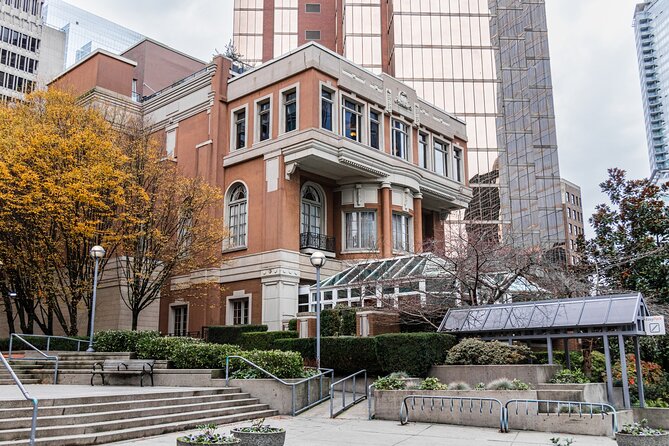
The Dominion, built between 1908 and 1910 by J.S. Heyler, brings a more decorative style to the route. Its Beaux-Arts design includes terracotta spandrels and Corinthian columns at the front entrance. The building is known for its colorful and highly distinctive appearance.
This stop rewards a slow look at the entrance. The puzzle is not just a test of memory. It asks you to use the building itself, which is the best part of the experience. You begin to notice materials, ornament, and repeated shapes because the app has trained you to search for them.
I would especially enjoy this section with friends who like taking photos or comparing answers. A group can split the visual search for a moment, then come together to enter the solution. Keep the group close, though. The game is private, but it is not a guided group where someone will wait and gather everyone back up.
The Sun Tower and Vancouver’s newspaper age
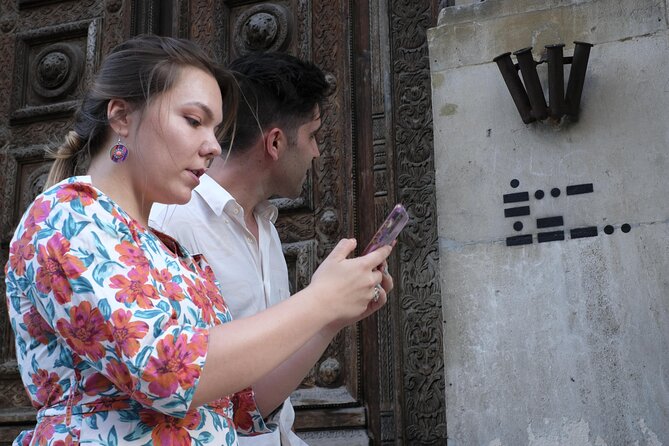
The Sun Tower was built in 1911 and 1912. Its heritage value comes from its landmark architecture and its link to Louis D. Taylor and the Vancouver World and Sun newspapers. It also marks the eastward growth of Vancouver’s business district.
This stop adds a useful reminder that downtown history is not only about railways and warehouses. Newspapers helped shape public life, politics, and the city’s sense of itself. The connection to Louis D. Taylor gives the building a personal and civic angle, while its location shows how the business center expanded.
The Sun Tower also gives the game a strong visual target. You can search for architectural clues and then connect them with the building’s former role. The information is compact, so you will not leave with a full account of Vancouver journalism, but you will have a clear reason to remember the tower.
The narrow Sam Kee Building
The Sam Kee Building at Pender and Carrall is one of the route’s most memorable sights. Built in 1913, it is celebrated for its ingenious design, its importance to Vancouver’s Chinese community, and the story of its namesake. The building represents both a difficult period of urban development and the resourcefulness of early residents.
Its unusual shape makes it well suited to a treasure hunt. You do not need a long explanation to understand that this is not an ordinary city building. The challenge encourages you to examine how the structure fits its site and to connect the physical design with the social history attached to it.
This is also one of the places where a self-guided game can add value. You have time to look closely and discuss what you see instead of standing in a listening group. The tradeoff is that the app cannot answer a follow-up question about Chinese Canadian history, so consider using the tour as a starting point rather than a complete account.
Meeting Gassy Jack, with necessary context
The route then reaches the statue of John Deighton, known as Gassy Jack, a saloon owner from the 1860s whose nickname gave Gastown its name. The statue and the neighborhood name are familiar parts of Vancouver’s public story, but the history is not simple.
Deighton married Quahail-ya, a 12-year-old Squamish girl whose English name was Madeline Deighton. His legacy has been re-examined in recent years because of this marriage and the wider colonial setting. The game includes this difficult context, which matters. A tour about Vancouver’s early development should not present the city’s founders as harmless characters from a cheerful legend.
This stop works best if you are willing to hold two ideas at once: Gassy Jack helped shape the name and identity of Gastown, and his personal history raises serious ethical questions. The statue is not merely a photo stop. It is a chance to consider whose stories are honored in public places.
Gaoler’s Mews and the 1886 fire
Gaoler’s Mews sits in the heart of Gastown on a site connected with Vancouver’s first jail. The original building dates to the mid-1800s. After Vancouver’s great fire in 1886 destroyed it, a brick fire hall replaced it.
This short piece of history gives the route a strong sense of change. The fire reshaped the young city, and the replacement fire hall points to the practical needs of a rebuilt community. You are looking at a small site, but the story reaches into law, public safety, construction, and urban survival.
The challenge should encourage you to look at the setting rather than rush straight to the next address. If your group has been moving quickly, this is a good place to pause and read the story carefully. The app allows you to stop and resume whenever you like, so there is no need to treat the 90-minute estimate as a race.
Finishing near the Alibi Room
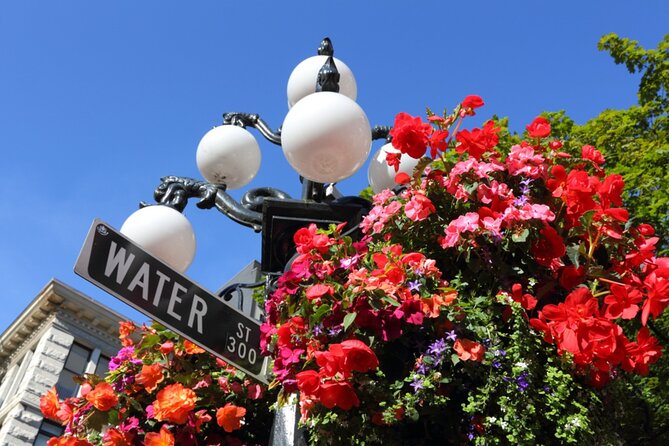
The final part of the route leads toward the Alibi Room area and Maple Tree Square on Water Street. The heritage building here is more than a backdrop for food and beer. It was built over 100 years ago beside the railyard, close to Vancouver’s trade and shipping ports.
That location brings several threads together. Rail, port commerce, old buildings, neighborhood life, food, beer, and local culture all meet in this part of Gastown. The Alibi Room has become a place where neighbors and the wider community gather, which gives the ending a more contemporary feel than the early stops.
The listed endpoint is Maple Tree Square, at 1 Water Street. The app guides you step by step to the Gassy Jack statue during the route, then continues through the remaining locations toward the finish. Pay attention to the app’s directions, since the route includes several old streets and closely spaced landmarks.
How the puzzles feel in practice
The puzzles are the engine of the experience, but they are not all equally strong. The best ones use the environment you have just reached. You look at an architectural feature, a sign, or a detail on a landmark, then use that observation to move forward.
Some clues may feel weaker in the middle of the game, especially if they rely less on the immediate surroundings. That is where the self-guided format shows its limits. A live guide could rephrase a question or offer a small hint without giving away the answer. Here, you need to use the built-in hints or choose the skip button.
That skip option is important. If you are playing with children, several couples, or a group with different patience levels, one difficult clue should not ruin the outing. The game lets you continue after getting the answer, so you can keep the history and the walking route intact even if you do not solve every challenge.
The experience works with one phone, and a group of three has used it successfully. Sharing a device is convenient, but make sure everyone can see and discuss the clue. For larger groups, the listing highlights group discounts, but no exact discount amount is provided, so check the current booking price before you pay.
Is $7.20 a good deal?
At $7.20 per person, this is inexpensive for a private activity lasting about an hour and a half. You are paying for the app, the puzzle content, the route, and the chance to explore as a small group. You are not paying for a guide, reserved entry, food, transportation, or a live performance.
I see the value most clearly for three types of plans:
- A first afternoon in Vancouver when you want a structured walk.
- A family outing that needs more action than a standard history talk.
- A low-cost activity between meals, shopping, or other downtown plans.
The price is less compelling if you want detailed historical interpretation or personal recommendations from a local guide. In that case, a guided walking tour may offer more explanation, though it will likely cost more and follow a fixed schedule.
The route’s flexibility adds real value. The listed hours run daily from 12:00 AM to 11:30 PM, and the game can be paused and resumed. You can build in time for shops or a break without losing the whole experience. One group completed it in about an hour and a half while also stopping at shops, which is a useful guide for your planning.
Who should book this game?
I would choose this for friends, families, couples, and independent-minded visitors who like solving clues and setting their own pace. It is also a good option if you want to see Gastown without committing to a long formal tour.
Most people can participate, and service animals are allowed. The route is near public transportation, which helps if you are staying outside downtown. Since the activity is private, only your group participates, so you do not need to match your pace to strangers.
I would think twice if your group dislikes phone-based activities, gets frustrated by riddles, or wants a guide to handle every transition. You should also download the game before starting and keep the phone charged. Offline access helps once the game is ready, but it does not remove the need to prepare the app.
Free cancellation is available if you cancel at least 24 hours before the start time. Cancellations or changes made inside that window are not refunded or accepted, so keep the deadline in mind when booking.
Should you book the Vancouver Old Town Treasure Hunt?
Yes, if you want a cheap, flexible way to explore downtown Vancouver and Gastown through observation and play. The strongest parts are the landmark variety, the short length, the offline access, and the ability to use hints or skip a stubborn clue.
Book it with realistic expectations. This is not a substitute for a full historical walking tour, and the quality of the riddles may vary from stop to stop. But for $7.20, you get a private 14-puzzle route through some of Vancouver’s most interesting old streets, with enough history to make the buildings stick in your mind.
FAQ
How long does the Vancouver Old Town Treasure Hunt take?
The experience takes approximately 1 hour and 30 minutes. You can pause and resume the game, so the total time can stretch if you stop at shops or take breaks.
How much does the experience cost?
The listed price is $7.20 per person. Group discounts are available, though the exact discount amount is not provided.
Is the tour guided?
No. This is a self-guided activity that uses the Questo app. There is no live tour guide.
What language is offered?
The game is offered in English.
Where does the activity start?
It starts at 1530-355 Burrard Street, Vancouver, British Columbia, V6C 2G8, at the Marine Building.
Where does the activity end?
The listed endpoint is Maple Tree Square, 1 Water Street, Vancouver, British Columbia, V6B 2H9.
How many puzzles are included?
The experience includes 14 puzzle-based challenges.
Can I pause the game?
Yes. You can pause and resume the quest whenever you like.
Does the game work offline?
Yes. Offline functionality is included, making the game accessible without a continuous internet connection after it has been set up.
Can my whole group use one phone?
Yes. The game can be played on one phone. A group of three has used one device successfully, though sharing the screen may require everyone to stay close.
Are hints available if I cannot solve a clue?
Yes. The game provides hints, and you can use a skip button to reveal the answer and continue.
Is the activity private?
Yes. Only your group participates in the private activity.
Are service animals allowed?
Yes. Service animals are allowed.
Is the route near public transportation?
Yes. The activity is near public transportation.
Can I cancel for a refund?
Yes, if you cancel at least 24 hours before the experience start time. Cancellations made less than 24 hours in advance are not refunded.
Just added around Vancouver
- Private Vancouver City Amazing Highlight Tour With Chinese Garden★ 5.0 · 3 reviews
- Private Chauffeured Airport to Whistler Transfer (YVR – Whistler)★ 3.5 · 3 reviews
- Stanley Park Self Guided Bike Tour★ 5.0 · 3 reviews
- Unforgettable Whistler ( Full Day Private Tour)★ 5.0 · 3 reviews
- Experience the Beauty of Vancouver’s Forests by Bike/E-Bike★ 5.0 · 3 reviews
- Private Accessible Vancouver Airport (YVR) Transfer to City of Vancouver★ 5.0 · 3 reviews
- Private Chauffeured Whistler Transfer (Vancouver to Whistler)★ 4.0 · 3 reviews
- 3 Hour Kayak in Vancouver with Coffee on the Beach★ 5.0 · 3 reviews
Walking Tours, compared.

A Wok Around Chinatown: Culinary and Cultural Walking Tour Led by a Chef
Read our review →
The Forbidden Downtown and Gastown Walking Tour
Read our review →
Gratuity-Based Vancouver City Highlights 3 Hour Walking Tour
Read our review →
Experience Gastown Vancouver’s Elite Walking Food Tour
Read our review →Browse the lists this tour appears in